 Develop Black
The Development Report →
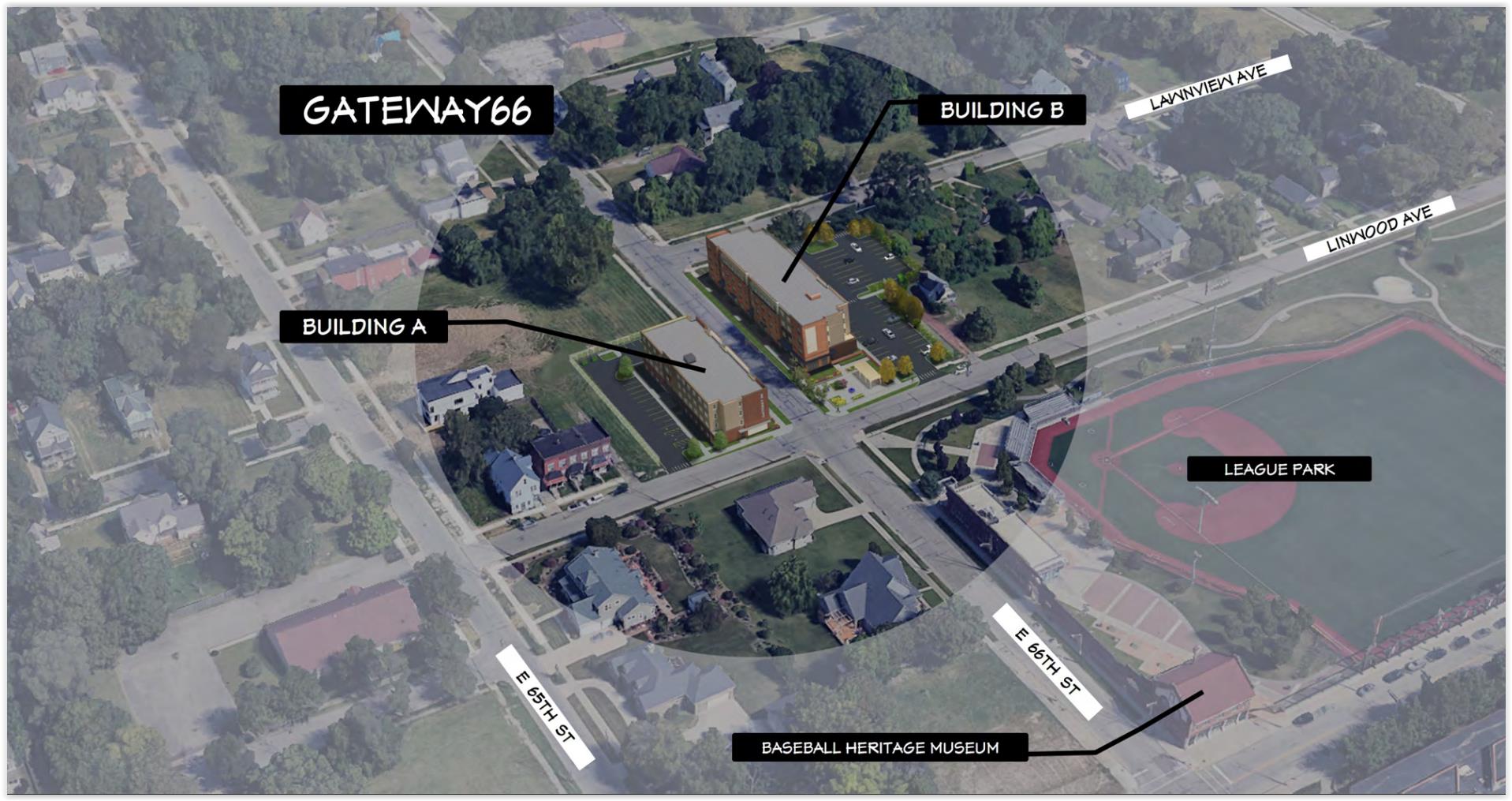
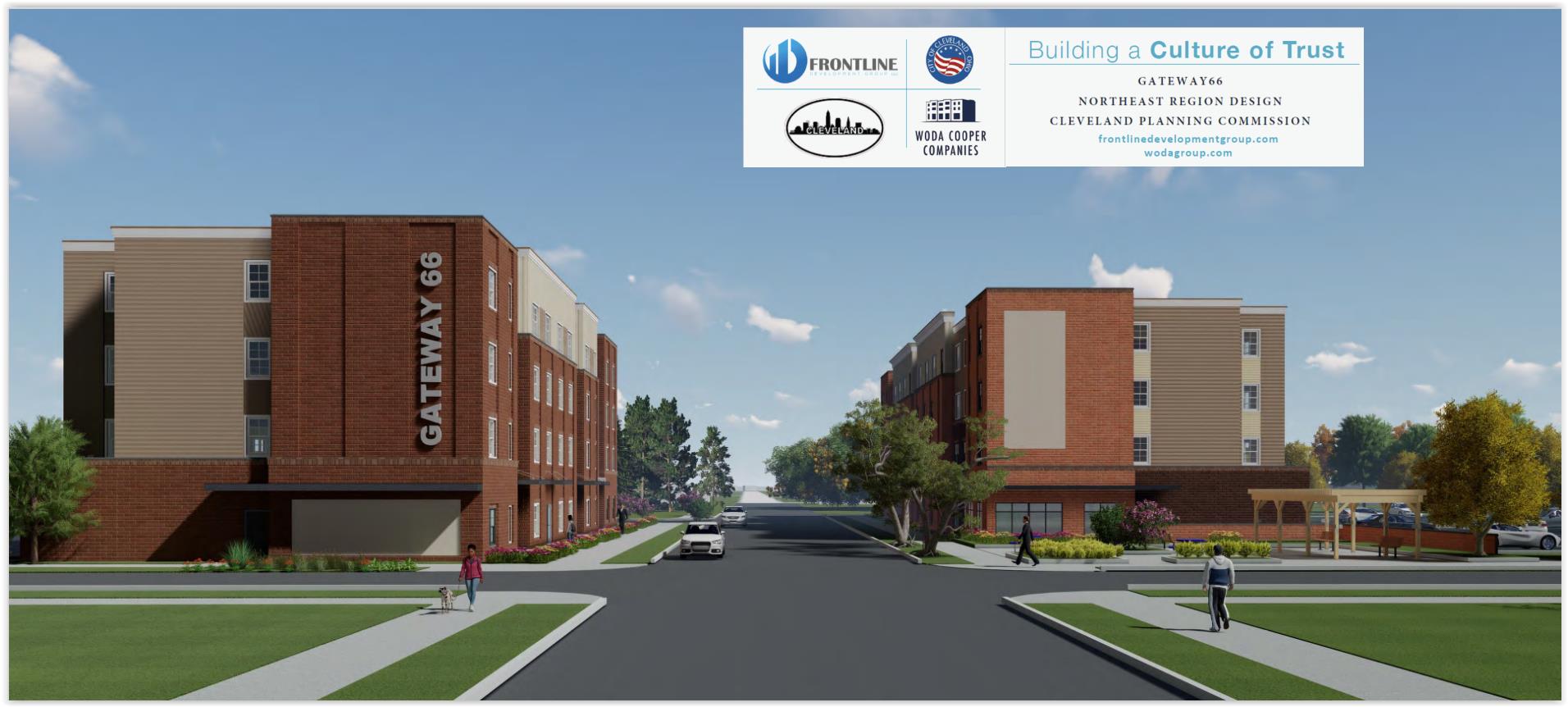
On October 20, Cleveland-based Frontline Development Group and partner Woda Cooper Companies broke ground on Gateway66, an 80-unit mixed-income development on both sides of East 66th Street, just north of historic League Park in the Hough neighborhood. Mayor Justin Bibb joined the firm's owners, Sheila M. Wright and Angela Thi Bennett, at the ceremony, NEOtrans reported.
The $27.9 million project spans two buildings with 56 one-bedroom and 24 two-bedroom apartments. Seventy-six units are set aside for households at a range of income levels, and four will rent at market rate.
Sheila M. Wright, Frontline Development Group
The firm
Frontline is a Black woman-owned development firm. Wright serves as president and Bennett as vice president and general counsel. Both grew up on Cleveland's East Side, and both hold law degrees and MBAs. The partners have said they measure success partly by who gets to work on their projects, and they have made room for minority contractors and workers a priority.
Gateway66 is a core piece of Allen Estates, Frontline's longer-term vision for the East 66th Street corridor. The firm previously teamed with Woda Cooper on Gordon Crossing, a 54-unit mixed-income building on the east edge of Hough that opened earlier this year.
How the deal came together
The capital stack is the lesson. In February 2025, University Hospitals approved a $3 million mission-related investment in the project as part of its community health investment strategy, which links stable housing to health and economic opportunity. In July, the Port of Cleveland approved a capital lease and the issuance of up to $25 million in taxable revenue bonds, which allowed the project to move forward.
For developers looking for capital, the hospital investment stands out. A hospital, university or other anchor institution may invest because a neighborhood's stability serves its own mission. That kind of money does not replace strong underwriting or a workable capital structure, but it can fill gaps conventional lenders will not.
The rest of the deal shows why relationships matter. Affordable and mixed-income housing usually requires a city, lenders, tax credit investors, neighborhood organizations and construction partners to line up at the same time. Frontline began assembling land, institutional relationships and public support for its Allen Estates vision years before Gateway66 reached construction.
What comes next
The test now is execution: delivering 80 finished homes on budget and honoring the affordability commitments behind the public support. For emerging developers, Gateway66 is a working example of how local knowledge, patient land assembly, aligned institutions and an experienced co-developer combine into a deal that closes.